
Pike County Criminal Court Cases
Pike County Superior Court is the main trial court for local criminal files. The Pike clerk says its Criminal Division files both felony and misdemeanor cases, including accusations, indictments, warrants, pleadings, bond forfeitures, grand jury presentments, and appeals. Pike County belongs to the Griffin Judicial Circuit, which also includes Fayette, Spalding, and Upson counties. Circuit judges and orders may span that circuit, but Pike County criminal court case files remain with the Pike clerk in Zebulon.
Other courts hold different slices. Pike Magistrate Court handles warrants, first appearances, and limited preliminary matters. Zebulon, Williamson, and Molena municipal courts keep their own ordinance and qualifying traffic files. A search at the Superior Court clerk is therefore not an exhaustive search of every municipal docket. Start by identifying which court accepted the filed charge, not merely which police agency made the arrest.
Pike Criminal Case Files Downtown
The official Pike Clerk of Superior Court site is the best starting point for court ownership and current office details. The Criminal Division counter is at 16001 Barnesville Street, Zebulon, Georgia 30295. It is open Monday through Friday from 8:00 a.m. to 5:00 p.m. The general line is 770-567-2000, and Rhonda Ard is the published warrants and dispositions contact at extension 2.
Bring or provide the full name, an approximate filing or arrest date, and a case number or Offender Tracking Number when known. Ask staff to distinguish the charging document from the final disposition. For remote requests, use P.O. Box 10, Zebulon, GA 30295, or fax 770-567-2017. The criminal page publishes no copy, search, postage, or certification schedule, so request a quote before ordering.
Pike Superior Court Clerk
16001 Barnesville Street
Zebulon, GA 30295
Mail: P.O. Box 10
770-567-2000, ext. 2
Monday-Friday, 8:00 a.m.-5:00 p.m.
The clerk homepage shown in the official source image confirms the office that maintains Pike County criminal court records.
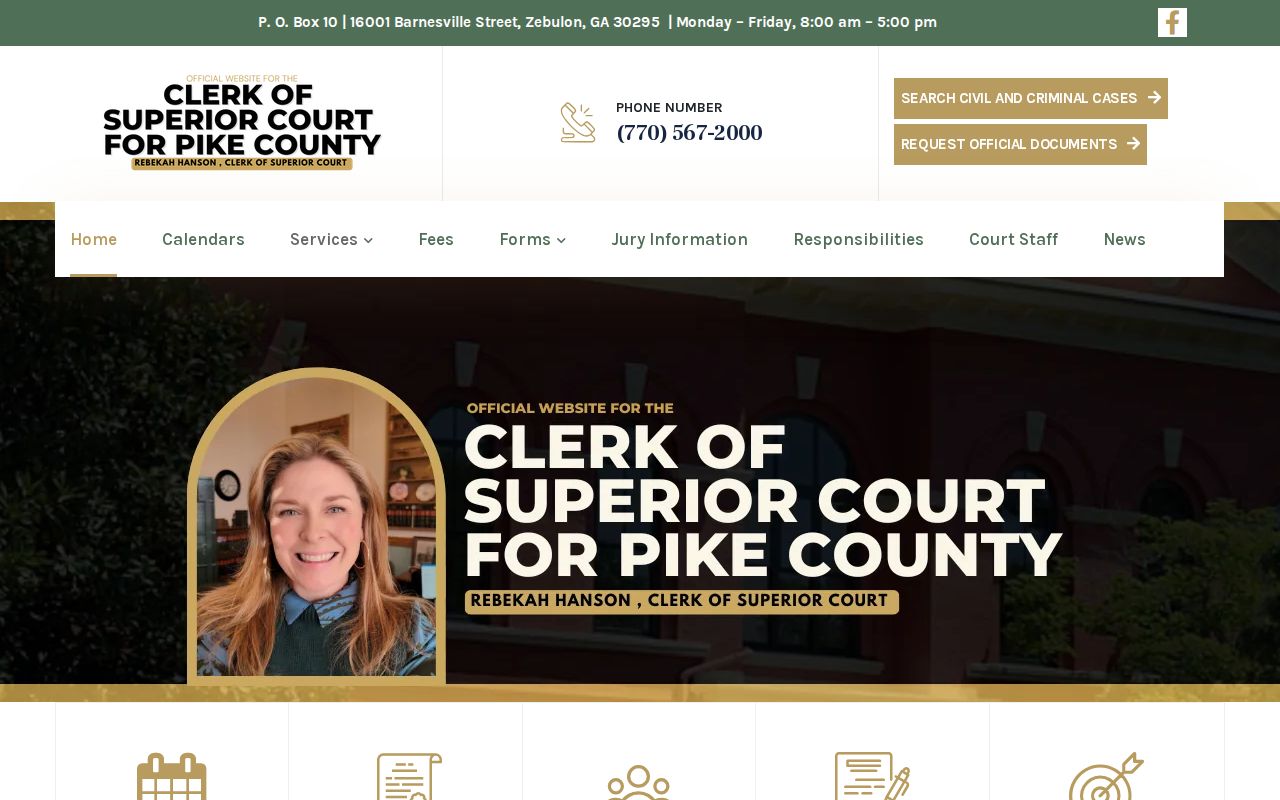
That clerk channel matters most when a portal result is absent or a certified disposition is needed.
Searching Pike County Case Records
The clerk advertises a “Search Civil and Criminal Cases” control, but its downstream site displayed a placeholder during the July 2026 research audit. Exact field labels, date coverage, wildcard rules, result limits, and document prices could not be verified. Do not rely on that advertised search as the only Pike County criminal case search. Use this fallback sequence instead:
- Open the clerk's Criminal Division page and try its civil and criminal search entry.
- If it fails, call 770-567-2000, extension 2, with a full name and approximate date or a case or OTN number.
- Ask for the docket, charging instrument, and final disposition rather than a broad summary.
- Request plain or certified copies by counter, mail, or fax after confirming charges and delivery terms.
- Use GSCCCA eCertification only for documents available inside that order workflow.
| Field Label | Type | Required | Notes |
|---|---|---|---|
| Party name | Expected text path | Unverified | Downstream vendor did not respond reliably |
| Case number | Expected text path | Unverified | Best identifier when supplied to staff |
| Date of birth | Not verified | Unverified | Do not assume this field exists online |
| Case type or year | Not verified | Unverified | Ask the criminal desk about coverage |
Pike Criminal Case Certifications
A certified disposition is a clerk-authenticated copy of the final court outcome. It is often more useful than a search screen when a Pike County charge must be matched to its result. The GSCCCA eCertification service is an electronic order channel, not a promise that every criminal document or historical case is indexed there.
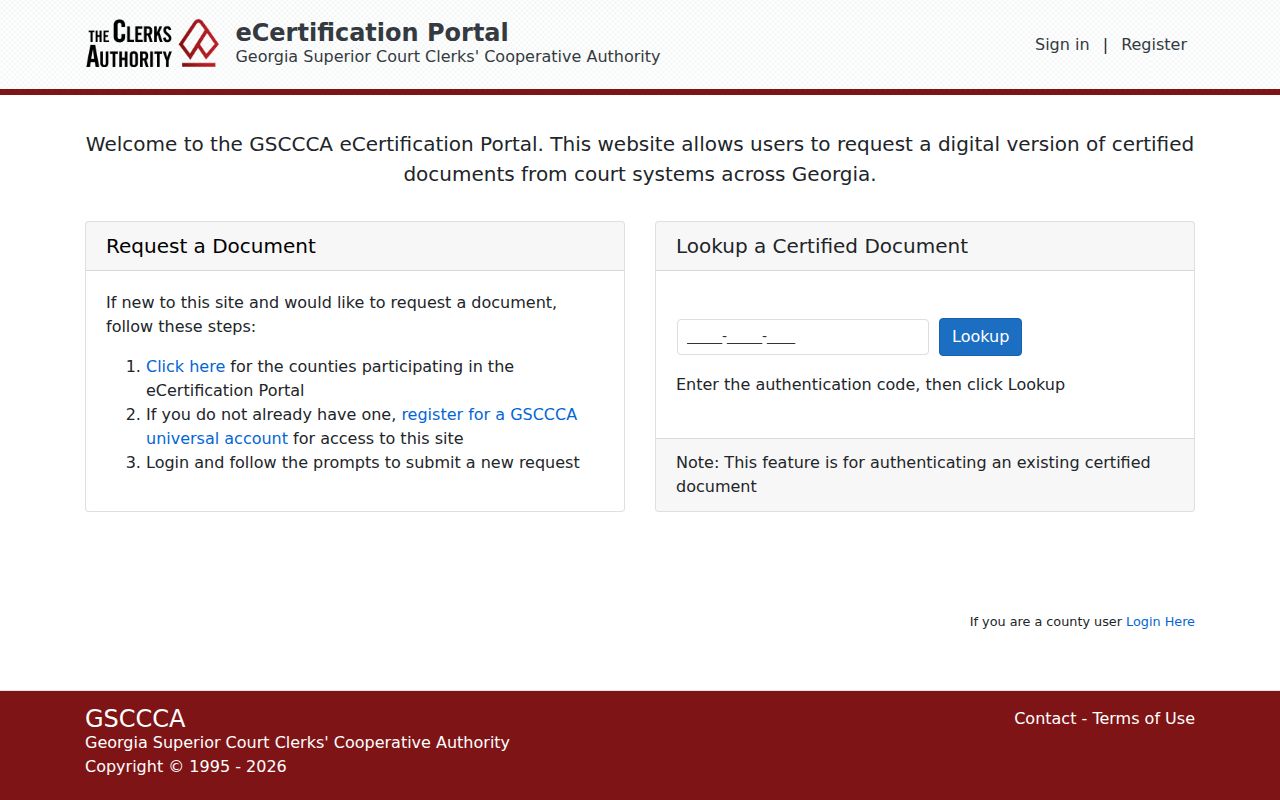
The order view can save a trip when the specific Pike document is eligible. Check account and case availability inside the workflow. If it is missing, contact the clerk and ask whether a paper certified copy can be mailed. Never transfer a civil fee schedule to a criminal request because Pike has not published criminal copy prices.
Inside a Pike County Case File
A court file records the prosecution after filing. It may begin with an accusation, which is a prosecutor-filed charge, or an indictment returned by a grand jury. It then tracks hearings, motions, pleas, rulings, disposition, sentence, and any appeal. These documents can differ from the sheriff's intake charges because prosecutors decide what to file.
| Case Number and Court | Identifies the Pike court and its local file. |
|---|---|
| Charging Document | Shows the accusation or indictment filed for prosecution. |
| Docket Entries | Lists filed pleadings, orders, and procedural events. |
| Hearing Dates | Tracks arraignment, motion, plea, trial, and sentence settings. |
| Disposition and Judgment | Records dismissal, nolle prosequi, acquittal, guilty plea, or verdict. |
| Sentence and Conditions | States custody, probation, fines, restitution, or other ordered terms. |
Pike Criminal Case Terms
Short docket labels carry major differences. Reading them correctly prevents a filed allegation from being mistaken for a judgment. Pike County criminal court cases commonly use Georgia terms that do not appear on a booking sheet in the same way.
- Accusation
- A prosecutor-filed charging document used when Georgia law permits filing without an indictment.
- Indictment
- A grand jury's true bill that formally charges an offense.
- No bill
- A grand jury declined to indict.
- Nolle prosequi
- The prosecutor formally chose not to pursue a charge.
- Disposition
- The reported final outcome of a charge or case.
A dismissal or nolle prosequi is not a conviction. A First Offender discharge can also affect public release and GCIC reporting. Obtain the signed order when the outcome matters, since a docket label alone may not show every condition.
How a Criminal Case Moves
An arrest and booking may precede a court file, but the case begins its filed life when a prosecutor submits an accusation or a grand jury returns an indictment. Arraignment presents the formal charges and takes a plea. Motions and discovery follow. The matter then ends through dismissal, plea, trial, or another lawful disposition, with sentencing after a guilty result. Appeals are filed and tracked by the clerk.
Case flow: Charges Filed › Arraignment › Pretrial › Plea or Trial › Disposition › Sentencing
The clerk reports final judicial dispositions to state systems, but that transfer can lag. A Pike County signed order remains the best source when GCIC has no outcome.
Pike Municipal Criminal Case Gaps
Municipal files do not merge into one Pike County portal. Zebulon, Williamson, and Molena each keep city-court records for ordinance and qualifying traffic matters. A city police arrest may reach Pike County Jail, yet its city-court docket can remain with the municipality. That is why a county clerk search cannot be treated as a full municipal search.
Ask the city clerk whether the matter stayed in municipal court or moved to a county court. Then use the Pike clerk for any accusation, indictment, or appeal filed there. This two-office check is especially useful when the arresting agency name appears in a booking record but no Superior Court case is visible.
Federal Pike Cases Route to Newnan
Federal criminal cases arising from Pike County do not live in the Pike Superior Court file. Pike is in the Newnan Division of the Northern District of Georgia. The federal clerk is at 18 Greenville Street in Newnan and can be reached at 678-423-3060. Courthouse terminals allow free viewing, while online federal dockets use PACER.
The Northern District of Georgia site identifies the federal court responsible for Pike-area federal matters.
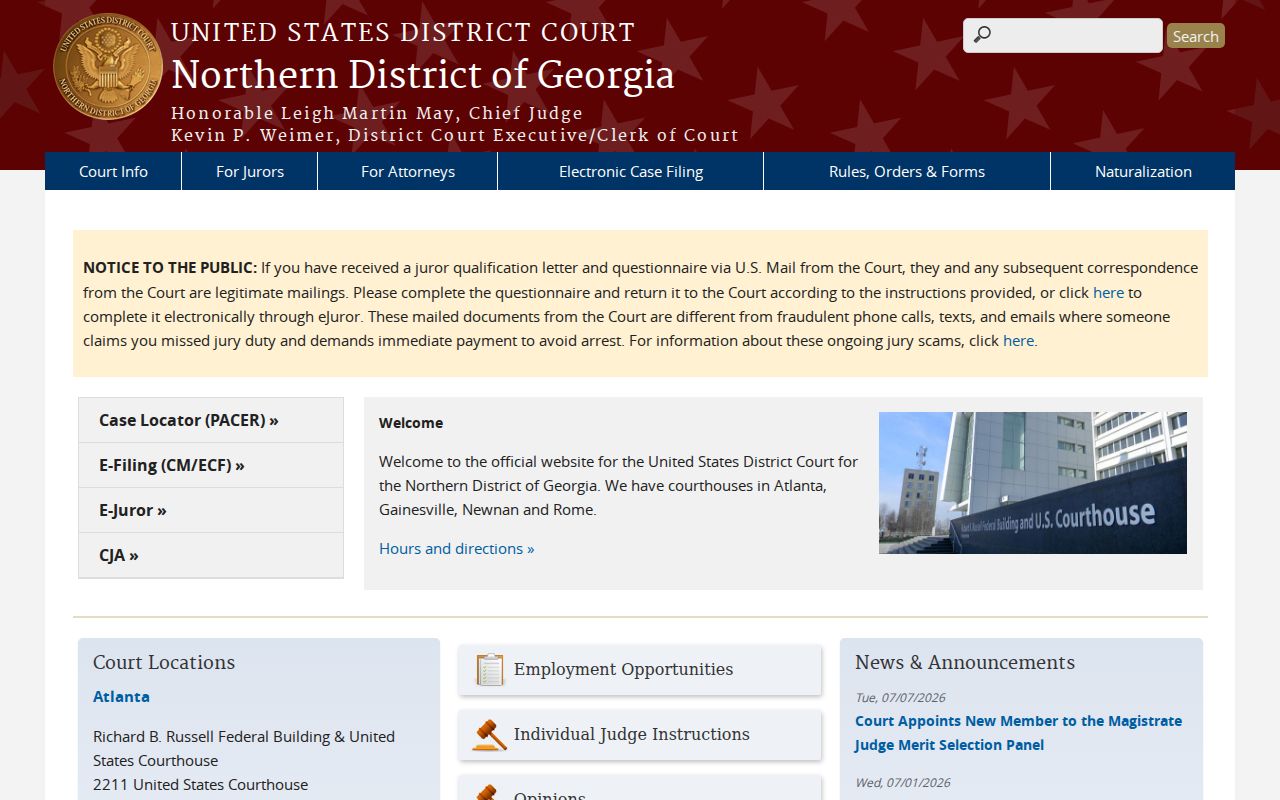
This federal layer is separate from Pike County charges and should be searched only when federal jurisdiction is plausible.
PACER is the official federal docket channel; its image illustrates the account-based route for federal case records.
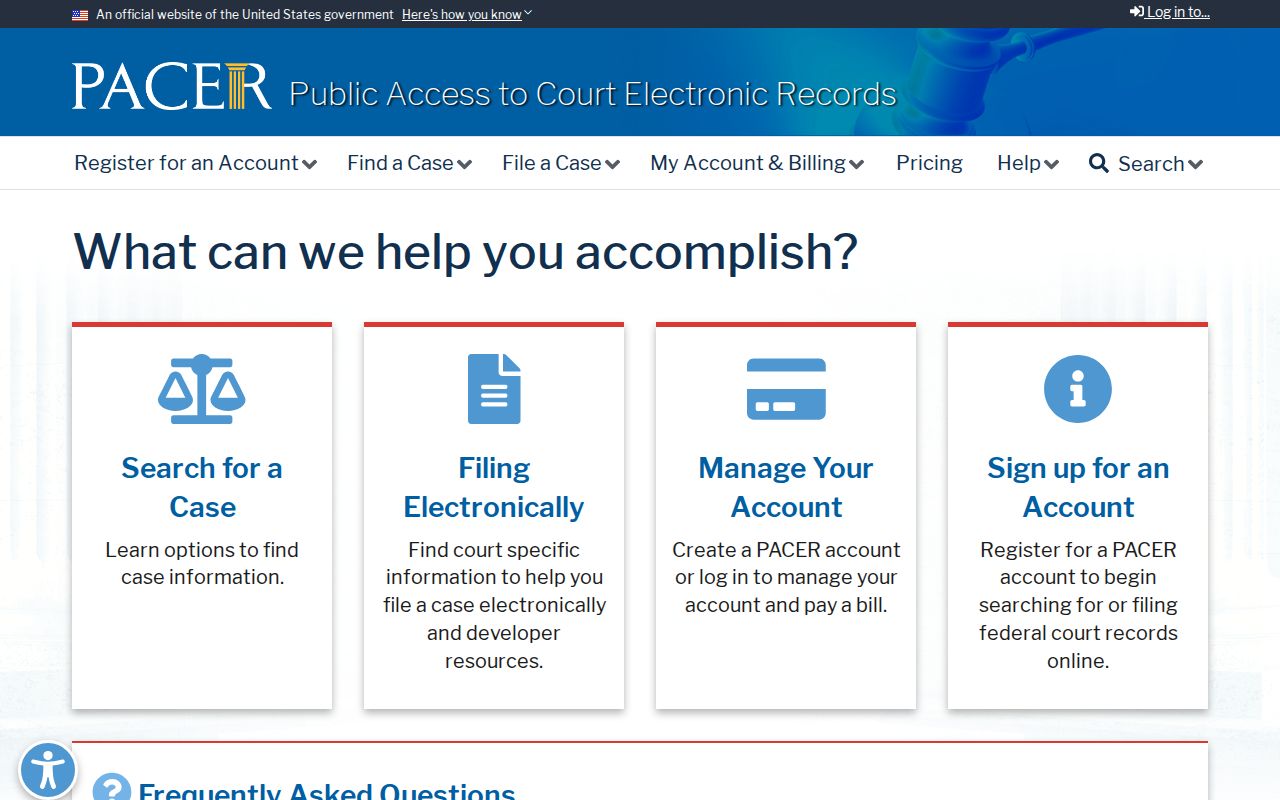
PACER charges by page under its published schedule, with some quarterly charges waived. Recheck current rates before a broad name search.
Case Record Access and Restrictions
Uniform Superior Court Rule 21 presumes court records open unless law or a qualifying court order restricts them. That rule does not expose every identifier or sealed item. Juvenile material, victim-sensitive data, protected personal identifiers, sealed warrants, and records covered by a restriction or sealing order may be withheld or redacted. An online view can also contain less than the paper file.
The Georgia Attorney General's open-records request guidance explains how to seek an existing record from the correct custodian.
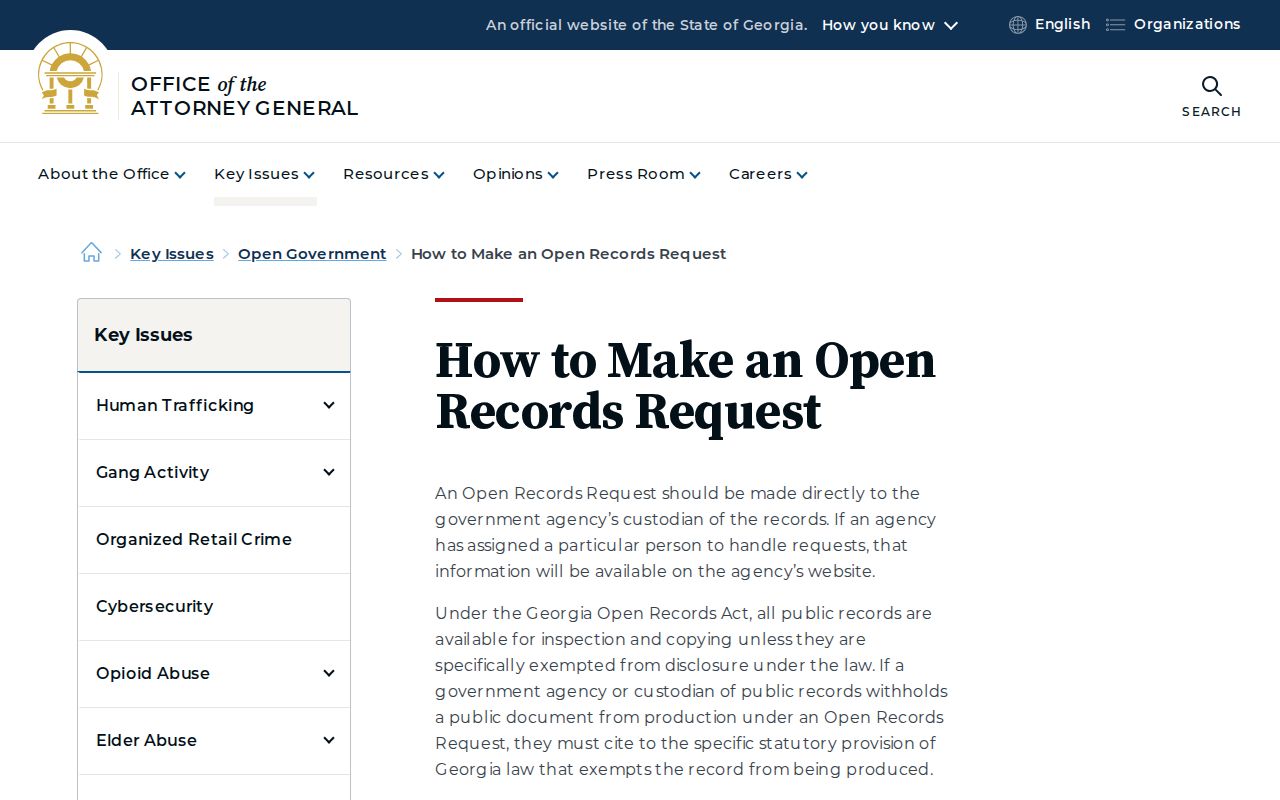
For Pike court documents, direct the request to the clerk. A written request should name the case, dates, desired documents, copy format, certification need, and a cost ceiling. If a record is withheld, ask for the legal basis and any segregable public portion.
Missing online material can reflect a portal failure, older coverage, delayed entry, a different municipal court, or a lawful restriction. It does not prove that no Pike County criminal court case exists.